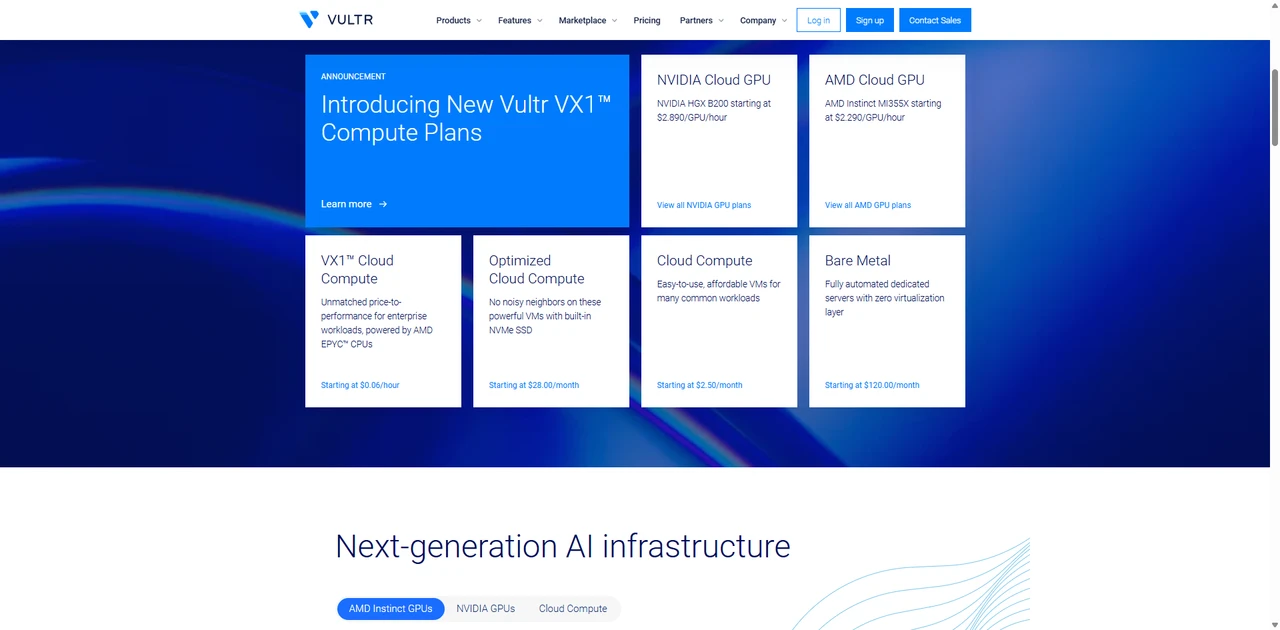
What is Vultr?
Vultr is a developer-focused cloud provider with 32 data centers worldwide. Known for fast NVMe SSD storage, a dead-simple API, and predictable pricing. Great for deploying close to your users or spinning up ephemeral servers for CI/CD pipelines.
In this review, we cover everything you need to know about Vultr in 2026 — including pricing, standout features, real pros and cons, and who will get the most value from it.
Vultr Pros & Cons
What we liked
- 32 global regions — easiest to deploy close to users
- NVMe SSD on all high-performance tiers
- Powerful CLI and Terraform provider
- $250 free credit for new accounts
Limitations
- Slightly pricier than Hetzner for EU workloads
- Support can be slow on free-credit accounts
Vultr Pricing (2026)
Prices may vary — always check the Vultr website for current pricing.
Who Should Use Vultr?
Developers needing global coverage or CI/CD ephemeral servers
Vultr is particularly well-suited for developers needing global coverage or ci/cd ephemeral servers. If this matches your use case, it's one of the strongest choices in the VPS & Hosting category.
Our Verdict
Developer Favorite in the VPS & Hosting category
Vultr earns a 4.7 / 5 in our independent testing. It excels at 32 global regions — easiest to deploy close to users, and nvme ssd on all high-performance tiers. The main limitations to be aware of: slightly pricier than hetzner for eu workloads; support can be slow on free-credit accounts.
At $2.50/mo, Vultr is a top-tier investment for developers needing global coverage or ci/cd ephemeral servers.
Ready to try Vultr?
Plans start from $2.50/mo.