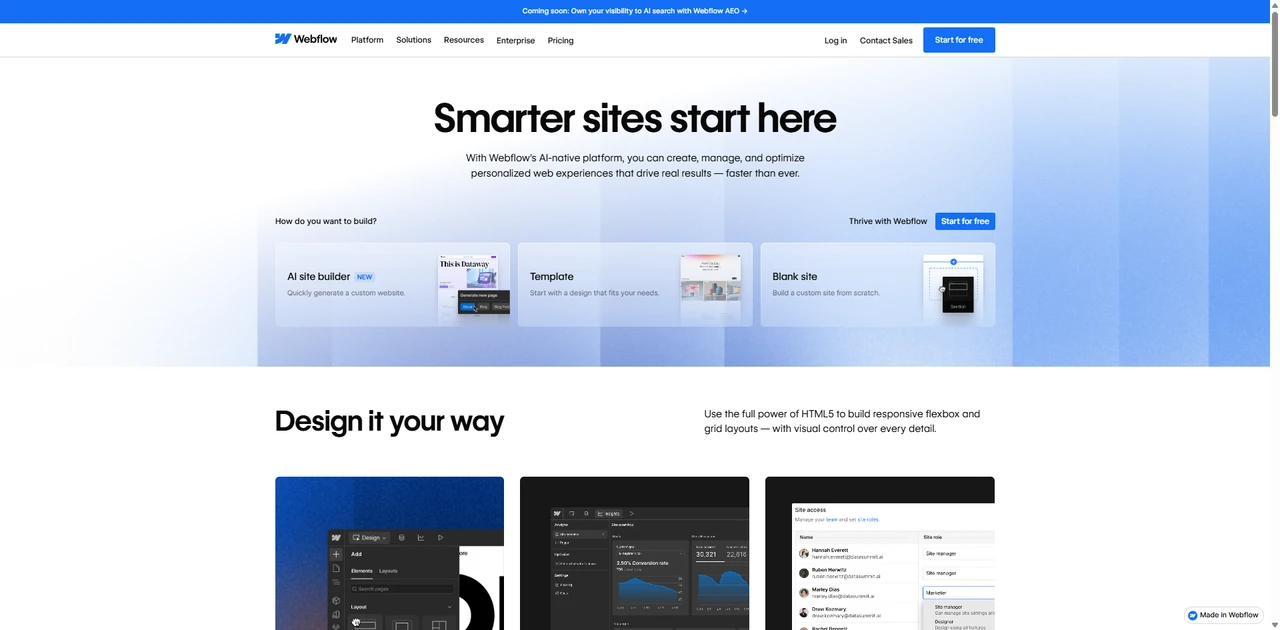
What is Webflow?
Webflow is the most powerful visual web development platform available. It generates clean HTML/CSS, supports CMS collections, custom interactions, and e-commerce. The learning curve is steep but the output is production-quality — no hand-off to developers required. Used by serious designers and marketing teams at fast-growing companies.
In this review, we cover everything you need to know about Webflow in 2026 — including pricing, standout features, real pros and cons, and who will get the most value from it.
Webflow Pros & Cons
What we liked
- Clean semantic HTML/CSS output — no vendor lock-in spaghetti
- Powerful CMS for blogs, directories, and portfolios
- Custom animations and interactions without JS
- Hosting included with global CDN
Limitations
- Steeper learning curve than Framer or Squarespace
- Can get expensive for CMS-heavy projects
Webflow Pricing (2026)
Prices may vary — always check the Webflow website for current pricing.
Who Should Use Webflow?
Designers and marketers who want full design control without writing code
Webflow is particularly well-suited for designers and marketers who want full design control without writing code. If this matches your use case, it's one of the strongest choices in the Website Builder category.
Our Verdict
Most Powerful in the Website Builder category
Webflow earns a 4.7 / 5 in our independent testing. It excels at clean semantic html/css output — no vendor lock-in spaghetti, and powerful cms for blogs, directories, and portfolios. The main limitations to be aware of: steeper learning curve than framer or squarespace; can get expensive for cms-heavy projects.
The free plan is a great entry point — no credit card needed. Webflow at $18/mo on paid tiers is competitive in the Website Builder space.
Ready to try Webflow?
Start for free — no credit card required.